Hunger strikes are a political device. Since the early 20th century, they have frequently provoked debate on the individual’s right to self-determination and the limits of the state’s duty to protect the well-being of its citizens and ensure their survival. When we read present day news reports on hunger strikes, the suffering body is in the focus of camera lenses and at the center of our imaginations. Unsurprisingly, questions on normative body ideals, fitness, and food seem to be rather absent. But in the Progressive Era (~ 1890s-1920s), they arguably played a vital, maybe even a formative role in establishing hunger strikes as a form of protest. Back then, British and American activists for women’s suffrage not only drew public…

» Read More

In 1972 John Yudkin, a physiologist, nutritionist and founding member of the Department of Nutrition at the Queen Elisabeth College in London, published a book called “Pure, White and Deadly – The new facts about the sugar you eat as a cause of heart disease, diabetes and other killers.” Since the late 1950s, Yudkin’s research had pointed to a connection between coronary thrombosis and sugar consumption, and he had argued against common ideas of fat causing obesity and problems like coronary heart disease. However, Yudkin could not make himself heard against the powerful voice of the sugar industry and of other scientific evidence pointing the finger at another suspect, so that Yudkin’s ideas vanished and “low fat became the new…

» Read More

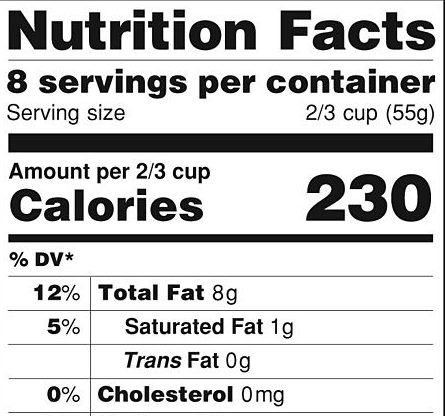
In May this year, the US Food and Drug Administration (FDA) introduced new labels that will have to be printed on most packaged food products by July 2018. In a presentation at the White House, Michelle Obama praised the label as making “a real difference in providing families across the country the information they need to make healthy choices.” Recent posts on this blog have discussed notions of transparency and choice. Today, I want to add some remarks on the history and politics of the gauge on which a lot of today’s food talk is based: on calories. The new food label includes a line on added sugars as well as changes in serving sizes. Its most visible change, however,…

» Read More

It is a contradiction to work for social justice and perpetuate fatphobia at the same time. This should be obvious, and yet many people with strong commitments to social justice often use rhetoric that entrenches the oppression of fat people. A popular, but pernicious, set of fatphobic assertions takes the form of what some scholars refer to as the “foodscape argument.” On its surface, the foodscape argument (which is also known as the “obesogenic environment” thesis, or the “environmental” theory of fatness) seems progressive. The theory postulates that western industrial societies are experiencing an “epidemic” of “obesity,” which is driven in large part by economic inequality. According to the foodscape argument, low-income people lack access to nutritious foods and are…

» Read More

“We have done it – This city has gone on a diet. Together we have reached our goal of losing 1,000,000 pounds! (…) Hopefully, we are a healthier, more vibrant, and progressive community. I would like to thank each and every person and organization who has contributed to the OKC Million program, and I encourage all to stay active, stay healthy, and stay involved. This is the beginning of a brighter future.” The “OKC Million-pound-program,” which was initiated by Mayor Mick Cornett in Oklahoma City in 2007, was a massive campaign aimed at the city’s population and the weight of their bodies. Mayor Cornett boasted in 2013 that his successful effort to bring the state’s capital into shape through restraining and disciplining…

» Read More